




For critical, oversized or high-value project cargo, many of the biggest logistics risks are created before the shipment starts moving. Once cargo has left the factory, changing the route, lifting method, transport equipment or destination arrangements can become significantly more difficult and expensive.
Early planning is key to understanding the cargo, the route, the handling requirements, the ports, the storage needs and the final delivery environment allows potential constraints to be identified before they affect the movement or the wider project schedule. When we plan critical cargo movements, these are ten of the questions we look to answer before the cargo leaves the manufacturer.
1. Is the cargo data confirmed?
Reliable cargo information is the foundation of the logistics plan. Depending on the cargo, this can include confirmed dimensions and weight, lifting points, centre of gravity, orientation, packaging and manufacturer handling requirements.
These details influence transport equipment, lifting arrangements, vessel planning, port selection, storage, route feasibility and final site access. If the data changes late, the logistics plan may need to change with it.
2. Has the full journey been planned from origin to final site?
International freight is only one part of the journey. Critical cargo may move through:
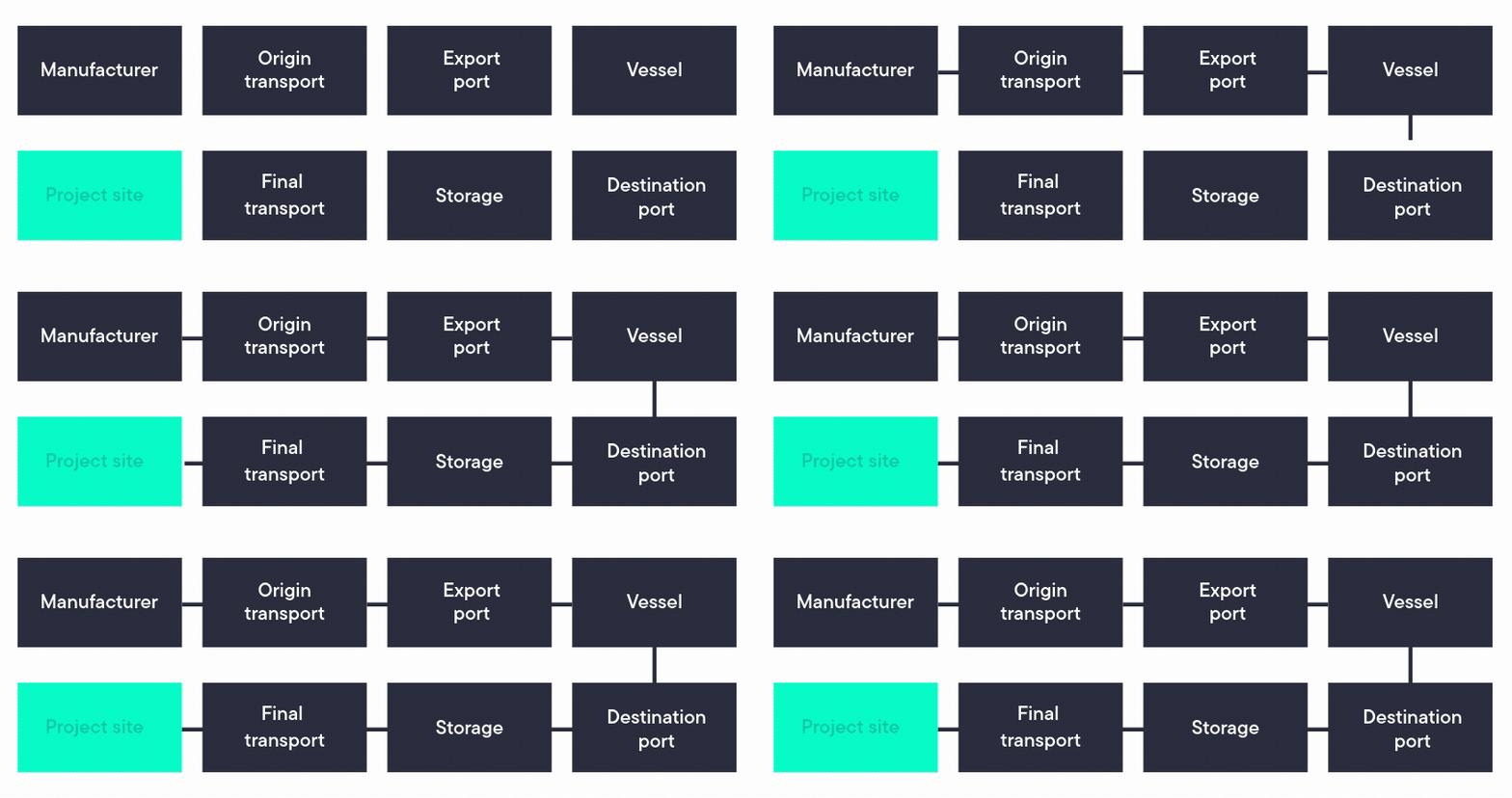
Looking at each stage in isolation can create gaps. A vessel route may work perfectly while the destination port creates problems for the onward journey, or cargo may arrive before the site is ready.
Effective end-to-end project logistics means planning the complete movement before the first stage begins.
3. Have all the lifting and handling points been identified?
Every lift, transfer or repositioning adds another operation that needs to be planned and controlled. For specialist cargo such as large cable reels, weight, centre of gravity, handling equipment and manufacturer requirements can all affect how the item should be moved.
The aim is not to eliminate every handling event, but to make sure each one is understood and planned before mobilisation.
4. Can the selected ports handle the complete operation?
Choosing a port for heavy lift or oversized cargo involves more than confirming that a vessel can berth there.
Vessel access, lifting capability, quay and ground conditions, laydown space, temporary storage and specialist transport access all need to work together.
The best port is not necessarily the closest one, but the one that supports the complete movement.
5. Is suitable storage available if the programme requires it?
Cargo does not always move straight from vessel to installation. Construction schedules change, installation dates move and equipment may arrive in a different sequence from the original plan.
Storage therefore needs to be fit for purpose, with suitable ground conditions, drainage, security, access, inspection arrangements, lifting capability, maintenance provision and onward transport.
Cable reels are a good example, where storage may also need to accommodate periodic turning, testing, call-off and final delivery.
6. Are the lifting requirements and responsibilities clear?
For heavy cargo, lifting should be planned well before the vessel or truck arrives. The requirements will vary by cargo and location, but understanding in advance what lifting operations will be required at each stage, who is responsible for them, who will develop, review and approve the lift plan, and what equipment will be needed and available when the movement takes place is key.
7. Has the final road route been assessed?
A cargo can travel thousands of miles internationally and still encounter its biggest constraint close to the final destination.
For abnormal load and oversized cargo transport, road width, bridge restrictions, overhead infrastructure, weight limits and site access can all affect the route. The loaded transport configuration can also change which routes are available.
The final miles therefore need to be assessed early, not shortly before delivery.
8. Is the receiving site actually ready?
Getting cargo to site is only a successful outcome if the site is ready to receive it.
Access, delivery routes, ground conditions, unloading arrangements, lifting equipment, personnel and the installation sequence all need to align.
If the site is not ready, an early delivery can create unnecessary storage, additional handling and extra cost.
9. Are responsibilities clear at every handover?
Complex project logistics often involves multiple organisations, including manufacturers, freight forwarders, shipping lines, ports, customs agents, storage providers, hauliers and site teams.
The challenge is not always whether each party understands its own role, but how effectively those roles connect.
At every major handover, ownership, communication, decision-making and escalation need to be clear. Without that clarity, a small issue at one stage can quickly become a wider programme problem.
10. Is there a plan for when the schedule changes?
Complex logistics will not always run exactly to plan. Vessel timings change, weather affects lifting operations, customs clearance can take longer than expected and construction schedules move.
Effective project logistics contingency planning is less about predicting every possible disruption and more about being ready to respond.
That means understanding key dependencies, available alternatives and who has the authority to make decisions quickly.
A good logistics plan should not only explain what happens when everything goes right. It should also help keep the project moving when something changes.
Plan the journey before the cargo moves
In our experience, the best critical cargo movements are shaped long before the cargo leaves the factory. Getting the route, lifting, storage and final delivery right early helps identify risks before they become delays.
Our recent cable reel movement from South Korea to Teesside showed exactly that. International freight was only one part of the job. The real value came from making every stage work together, so the cargo arrived where it was needed, when it was needed, ready for what came next.