



CBAM isn't a one-off exercise. It's a repeatable operational process.
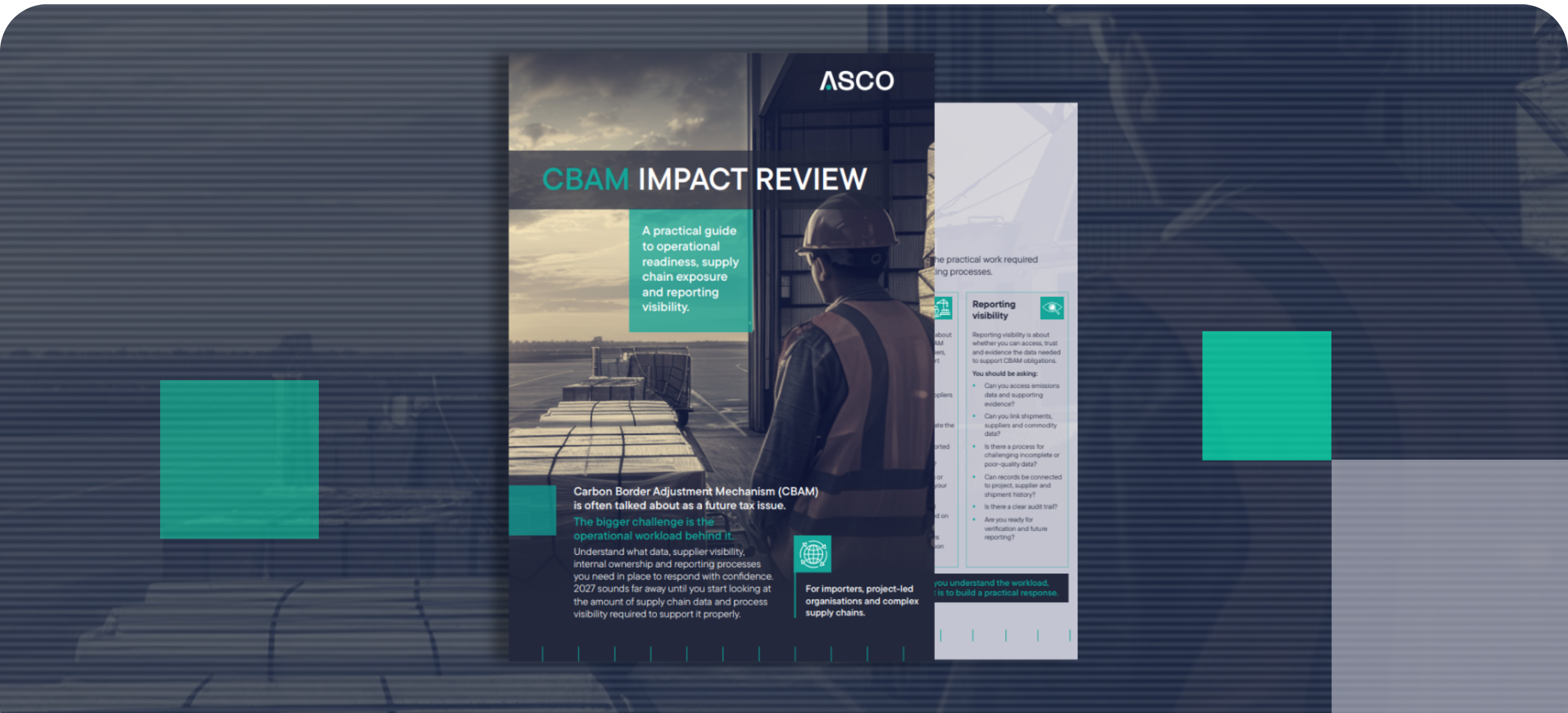
A practical guide for importers, project-led organisations and businesses with complex supply chains.
Carbon Border Adjustment Mechanism (CBAM) is often framed as a future tax issue, but the bigger challenge is the operational workload behind it. Managing CBAM means having the data, supplier visibility, ownership and reporting processes in place before you need them.
That preparation extends beyond tax and compliance. CBAM readiness spans procurement, logistics, finance, sustainability, operations and project teams. If ownership is unclear, exposure can be missed or identified too late. With the EU CBAM definitive phase underway and UK CBAM starting in January 2027, businesses need to understand now what data and process visibility they will need.
This guide provides a practical framework for assessing your readiness across commodity mapping, supplier engagement, emissions data, document retention and ongoing monitoring. It focuses on three critical areas:
- Operational readiness: Whether you have the ownership, processes and controls to manage CBAM as part of day-to-day business.
- Supply chain exposure: Where CBAM risk sits across suppliers, goods, projects and import routes, including indirect and third-party imports.
- Reporting visibility: Whether you can access, trust and evidence the emissions and shipment data needed to meet your obligations.
Explore related services


